Finding a candidate source among 1.28 million.
One worked example, on images, of what generation-moment attribution returns and how to read it. Four steps and a note on what it does not claim.
The haystack
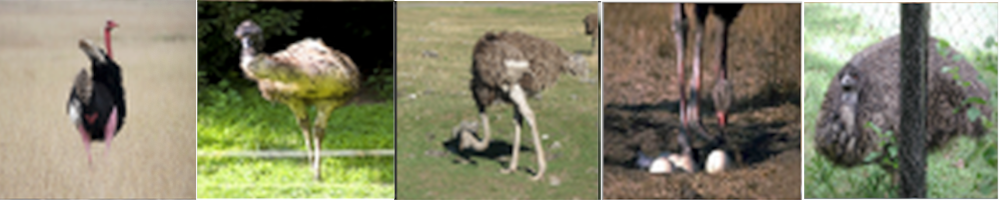
DMD2, a state-of-the-art diffusion model, was trained on 1.28 million photographs from ImageNet. This is a public corpus and a public model, which is why we can show the whole exercise rather than describe it.
The question a licence needs answered is which of those 1.28 million works contributed to any particular new image. Asked after the fact, against a finished artifact, it is a needle-in-a-haystack problem with no ground truth to check against.
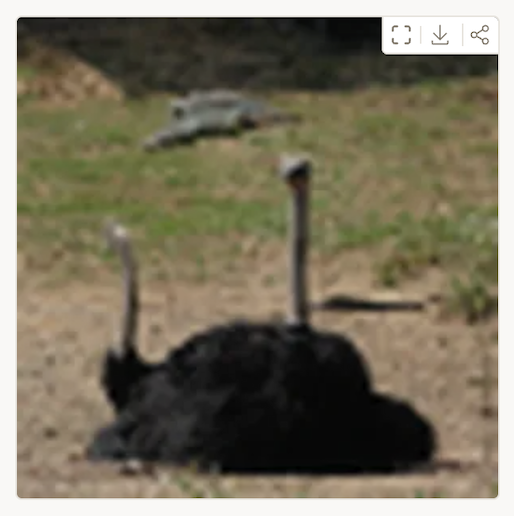
The generated item
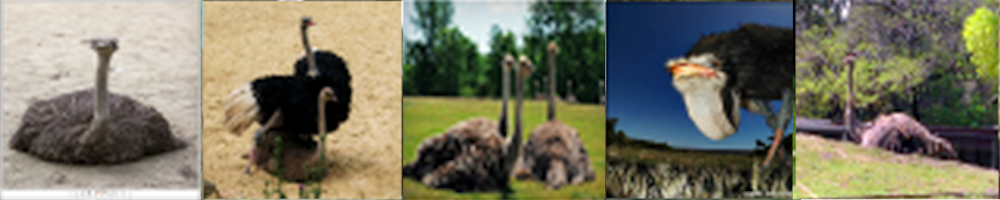
We asked the model for new images of ostriches and picked one to investigate. The image is new: it is not in ImageNet, and it is not a copy of anything in it.
This is the ordinary case, and the hard one. Nothing here would be caught by a duplicate check or a watermark, and nothing about the image announces which works shaped it.
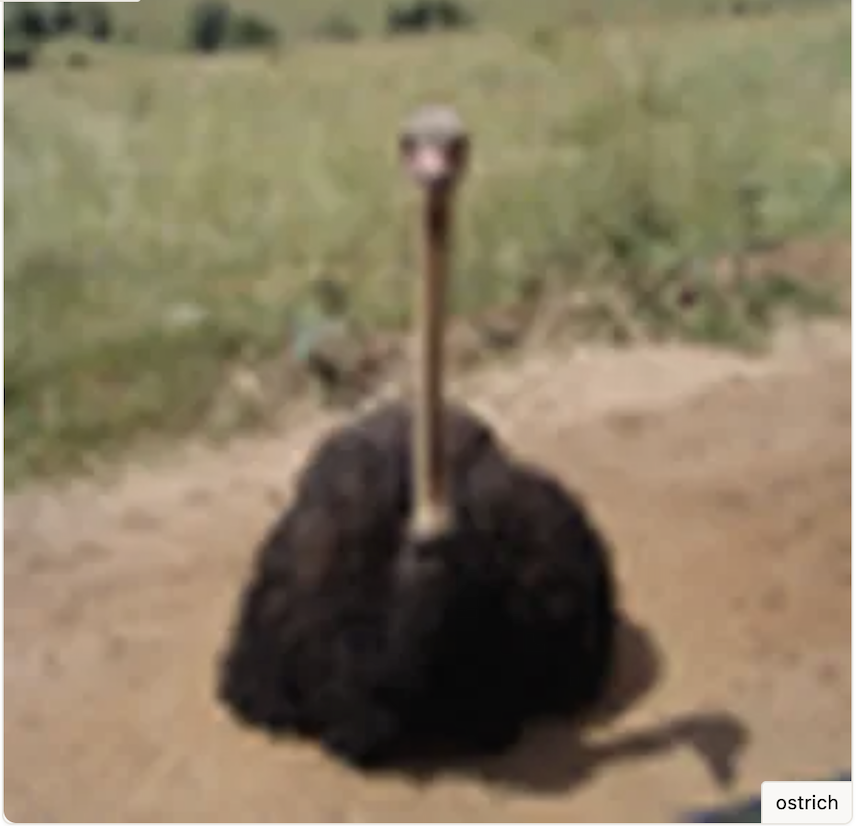
The candidate source returned
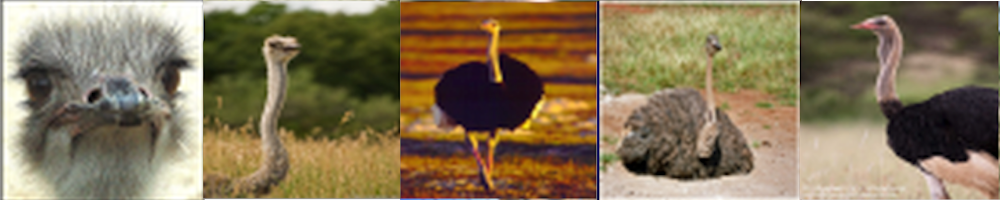
Out of the 1.28 million training photographs, Yodal returns the photograph on the right as a candidate source for that generation, in under a second. We call it a candidate source rather than the source deliberately: what is reported is measured contribution with a stated basis, not a causal proof.
Why this is not chance, and not a resemblance match
The two images are not identical, and the candidate was not chosen for looking like the output. What makes the result meaningful is that it coincides with the generated image on four independent properties, each of which most of the corpus does not share.
What this shows, and what it does not
It shows that contribution can be measured at the moment of generation, at corpus scale, fast enough to sit inside a transaction. That is the claim, and it is the one a licensing regime needs.
It does not show a causal proof that this photograph and no other produced this image.
It also does not settle whether this output infringes. The regime is designed so that a rightsholder's terms decide what happens next rather than our threshold deciding it for them.